by Mohammad Rababah
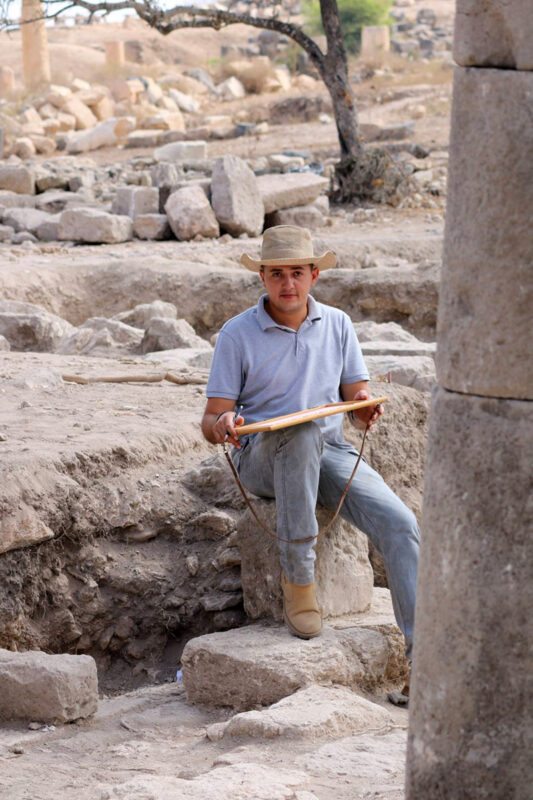
My journey with archaeology began not in a high-tech laboratory, but in the red dust of Jordan’s ancient sites. As a student at Yarmouk University and later as a field archaeologist, I spent years unearthing the tangible remains of our past, working on projects that stretched from the Roman aqueducts of Gadara (Umm Qays) to the Nabataean wonders of Petra. There is a unique, almost indescribable thrill in discovering an ancient coin in a fresh excavation layer. To me, it is never just a piece of metal; it is a tiny, circular portal to a specific year, a specific ruler, and an entire economy that existed thousands of years ago. However, my early experiences teaching field archaeology at sites like Umm Qays taught me a sobering lesson: the most dangerous threat to our history is not time or erosion—it is the modern forger.
In recent years, the challenge of counterfeit ancient coins in Jordan evolved from a niche scholarly concern into a pressing matter of public debate. News of sophisticated forgeries circulating in the local market, and even more distressing reports of original numismatic collections in museums being swapped for replicas, shook the public’s trust. These were no longer just legal cases; they became “matters of public opinion,” threatening the very integrity of our national identity. As a researcher who had already spent years combating the illicit trade of antiquities, I realized that our traditional methods of visual inspection were no longer enough to verify these ancient currencies. We needed a “scientific shield”—a way to let the coinage itself testify to its own age and authenticity.
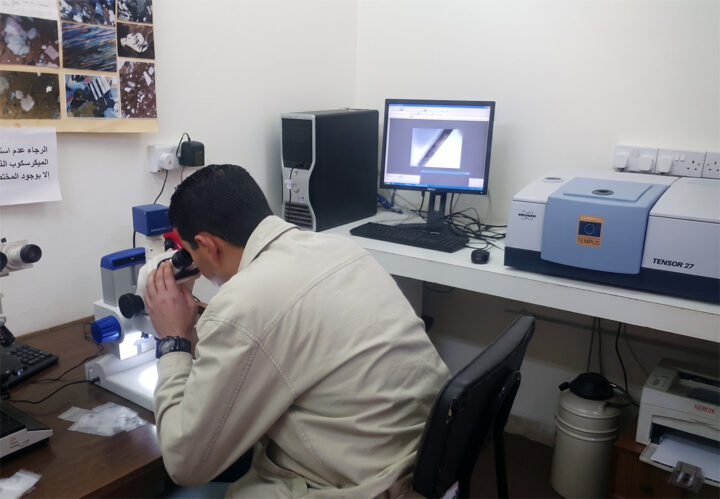
My pursuit of this scientific solution started during my MA studies at Yarmouk University. I owe a great debt of gratitude to Prof. Ziad Al-Saad, who was the first to truly open my eyes to the gravity of this issue. Drawing from his experience as the former director general of the Department of Antiquities, he shared a profound, first-hand perspective on the true scale of the counterfeiting crisis and the real technical challenges Jordan faced in confronting it. It was through his guidance that my passion was truly ignited; I felt a deep responsibility to fight this phenomenon and protect our heritage. This inspiration drove me to develop a rigorous, multi-tiered authentication protocol, moving from stylistic and physical assessments to investigating manufacturing methods, and finally, a deep dive into the chemical composition of the metal.
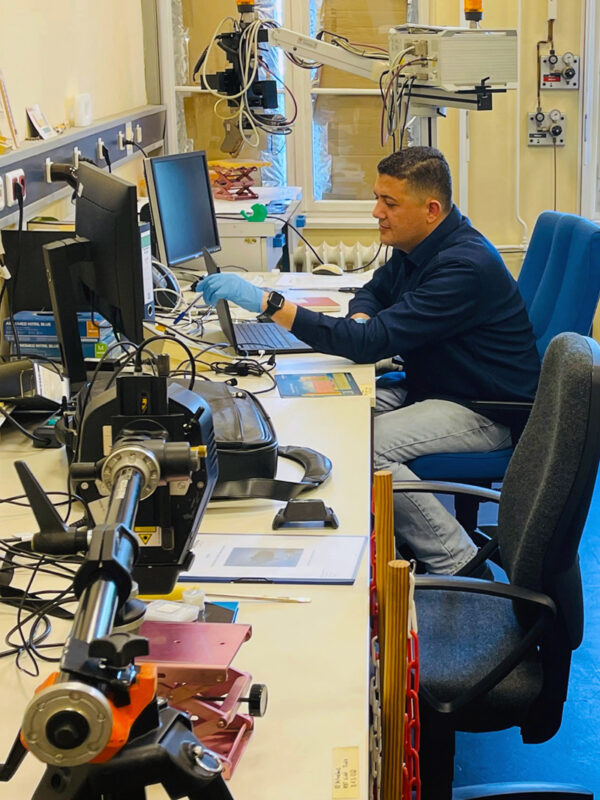
To bring this vision to life, I moved to Germany to pursue my PhD at the Technische Universität Berlin. I was incredibly fortunate to conduct my research under the supervision of Prof. Stefan Simon, director of the Rathgen Research Laboratory, which is part of the Staatliche Museen zu Berlin (National Museums in Berlin). Prof. Simon provided unwavering support for this study, opening the doors to the oldest museum laboratory in the world and offering all the laboratory’s resources and cutting-edge facilities to implement and validate my methodology. My project was specifically focused on developing a comprehensive, systematic approach for the detection of the counterfeiting of ancient coins. This methodology is built on a multi-tiered forensic sequence designed to uncover even the most sophisticated modern replicas. The process begins with a meticulous visual inspection to analyze stylistic features, followed by physical assessments such as weight and density measurements. We then move into the heart of the technical analysis: investigating the manufacturing methods to see if they align with ancient striking or casting techniques. The final and most decisive stage involves a deep dive into the chemical composition of the metal. By integrating these layers—from surface aesthetics to elemental DNA—we can reach a point of absolute certainty regarding the coin’s authenticity. The ultimate goal was to apply these rigorous tests to a corpus of coins seized by Jordanian law enforcement and held by the Department of Antiquities (DoA)—the legal guardian of Jordan’s cultural heritage.
However, I soon faced a major logistical challenge. The administrative and legal requirements for shipping these artifacts from Jordan to Berlin were extremely complex. Progress became possible through a shift in the management approach at the DoA, which prioritized international scientific collaboration to solve such hurdles. With the direct facilitation of the minister of Tourism and Antiquities, Dr. Imad Hijazeen, and the director general of Antiquities, Dr. Fawzi Abu Danah, together with the professional staff at the DoA, it was decided to conduct the study locally. They provided the necessary workspace and support within the DoA facilities in Amman, allowing us to implement the methodology on site and ensuring that the project could move forward effectively. “Progress often requires a shift in perspective.” A practical solution was reached. Rather than moving the coins to the lab, I brought the lab to the coins.
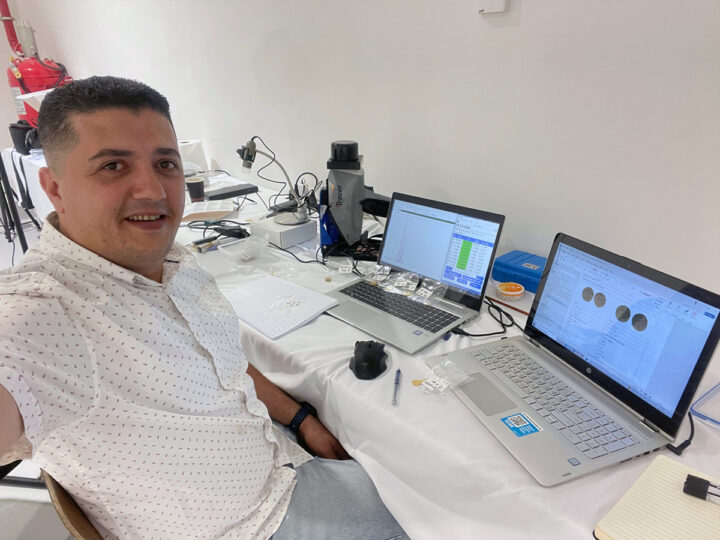
To overcome the daunting logistical challenges, I built a comprehensive “micro-laboratory” from the ground up directly within the main storage facilities of the DoA. This was not merely a setup, but a full-scale mobilization of technical resources that involved the carefully managed transfer of analytical instruments and delicate conservation tools from the Regional Center for Conservation and Restoration in Jerash to the repositories in Amman. This strategic feat transformed a standard storage environment into a high-level scientific hub, ensuring the 65 confiscated ancient coins remained in a secure, controlled space while being subjected to rigorous investigation.
The creation of this laboratory was further empowered by the James A. Sauer Fellowship (2025–2026) from ACOR, which provided the essential funding to equip the site with a sophisticated suite of technology. This included the procurement of high-precision measurement tools, specialized mechanical cleaning equipment, and advanced imaging gear for professional macro-documentation. By building this functional laboratory “from scratch” within the heart of the repositories, I demonstrated that world-class archaeological science can be successfully localized.
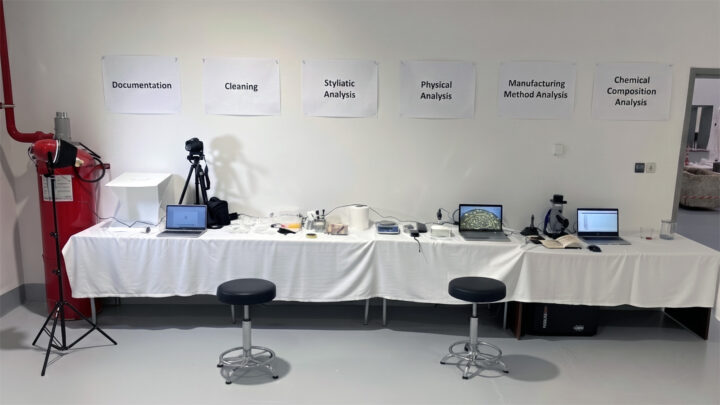
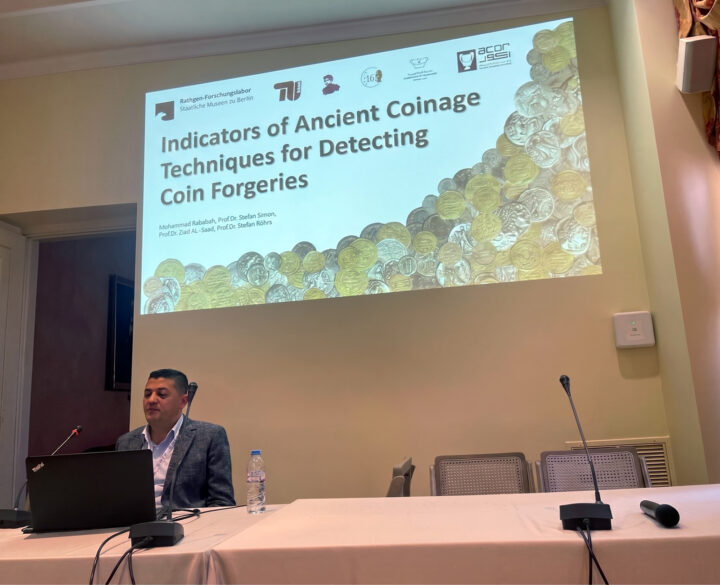
The completion of this phase marked a significant milestone; while I meticulously restored the storage area and returned the borrowed equipment to Jerash, the impact of the work remained deeply embedded. The facilities were left physically unchanged, yet they were now enriched with a wealth of invaluable scientific data—a digital and analytical legacy that previously did not exist. The success of this approach led me to the 16th International Conference on the History and Archaeology of Jordan (ICHAJ 16) in Athens, where I presented this “Jordanian Model” of scientific numismatic authentication to global experts.
Today, the project is expanding; I am currently planning to incorporate a diverse range of study samples from various key institutions, including the Jordan Museum and the Jordan Ahli Bank, to broaden the scope of my findings. This ongoing work will culminate in the presentation of my final results at the ASOR Annual Meeting in Chicago in 2026, marking a significant milestone in this international outreach. This project has evolved into a pivotal pillar for heritage preservation in Jordan, providing the definitive evidence needed to distinguish our genuine history from modern fabrications. This work is more than just a PhD; it is a long-term commitment to ensuring that Jordan’s numismatic history remains untarnished. By establishing a comprehensive scientific fingerprint encompassing the stylistic, physical, and chemical attributes of every coin, I am creating a permanent and faithful guardian for our historical truth.
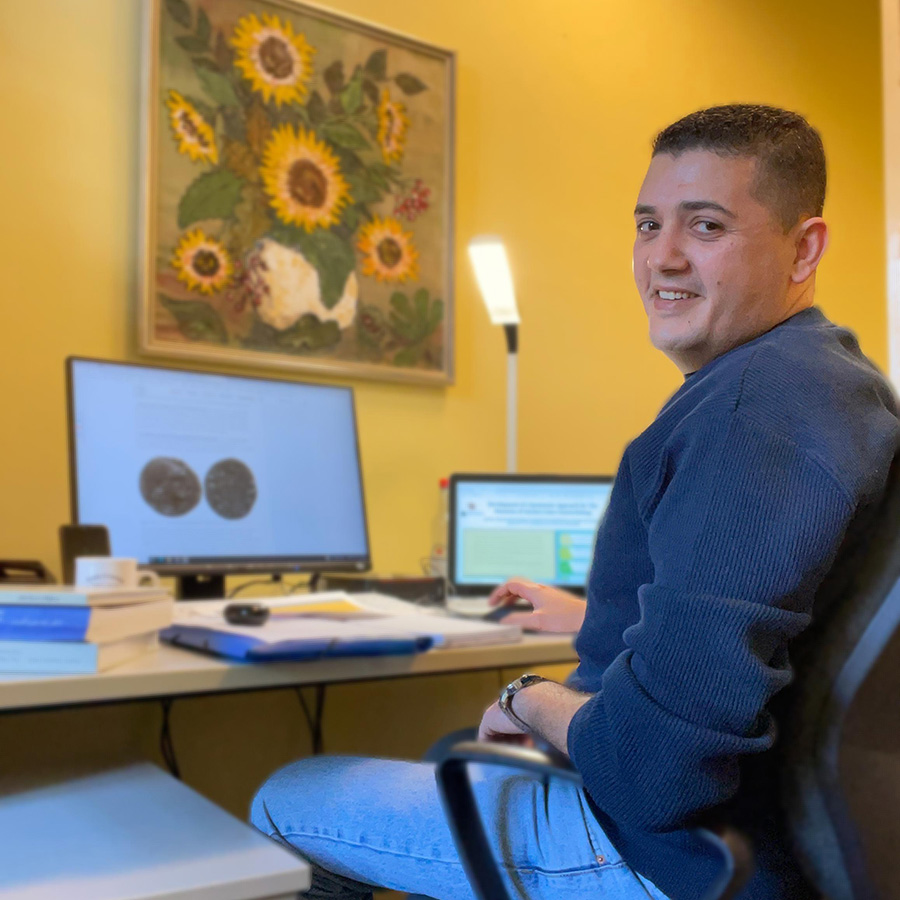
Mohammad Rababah is a PhD candidate in archaeology at Technische Universität Berlin. His research focuses on developing a systematic methodology for detecting ancient coin counterfeiting using non-destructive scientific techniques, advanced imaging technologies, and machine learning. This innovative approach aims to improve the authentication of numismatic collections and support the protection of cultural heritage. He holds a master’s degree in conservation and management of cultural resources and a bachelor’s in archaeology and anthropology from Yarmouk University in Jordan. From early in his academic journey, Mohammad has been deeply engaged in the preservation of Jordan’s archaeological legacy. With over a decade of professional experience, he has worked as a field archaeologist with the German Archaeological Institute in Saudi Arabia and Yarmouk University. His responsibilities have included excavation, artifact analysis, documentation, and heritage conservation. He has also served as a teaching assistant and research associate on several international cultural heritage projects, contributing to education, preservation, and site management. His current research includes collaborations with museums and laboratories in Jordan and Germany, analyzing ancient coin samples to develop a replicable framework for detecting forgeries. Mohammad’s work stands at the intersection of archaeological science and heritage protection, blending technical precision with cultural responsibility.